

The Illegal Trade and Sale of Psittacids in Latin America: A Silent Crisis
Psittacids, such as parrots, macaws, and parakeets, rank among the most extracted and illegally traded wild animals. This is a clandestine trade that operates on an alarming scale, driven by networks of poachers, intermediaries, and both local and international markets.
It is estimated that between 400,000 and 800,000 psittacid eggs, including parrots and macaws, are removed from their natural habitats every year in Latin America to supply the illegal pet trade.
In highly biodiverse countries such as Colombia and Ecuador, parrots and macaws represent between 74% and 91% of all birds rescued from illegal trafficking, with genera such as Amazona among the most affected.
Despite partial or total bans in several countries across the region, official estimates indicate that the annual illegal capture of psittacids remains critically high, ranging between 34,000 and 41,500 individuals in key distribution areas.
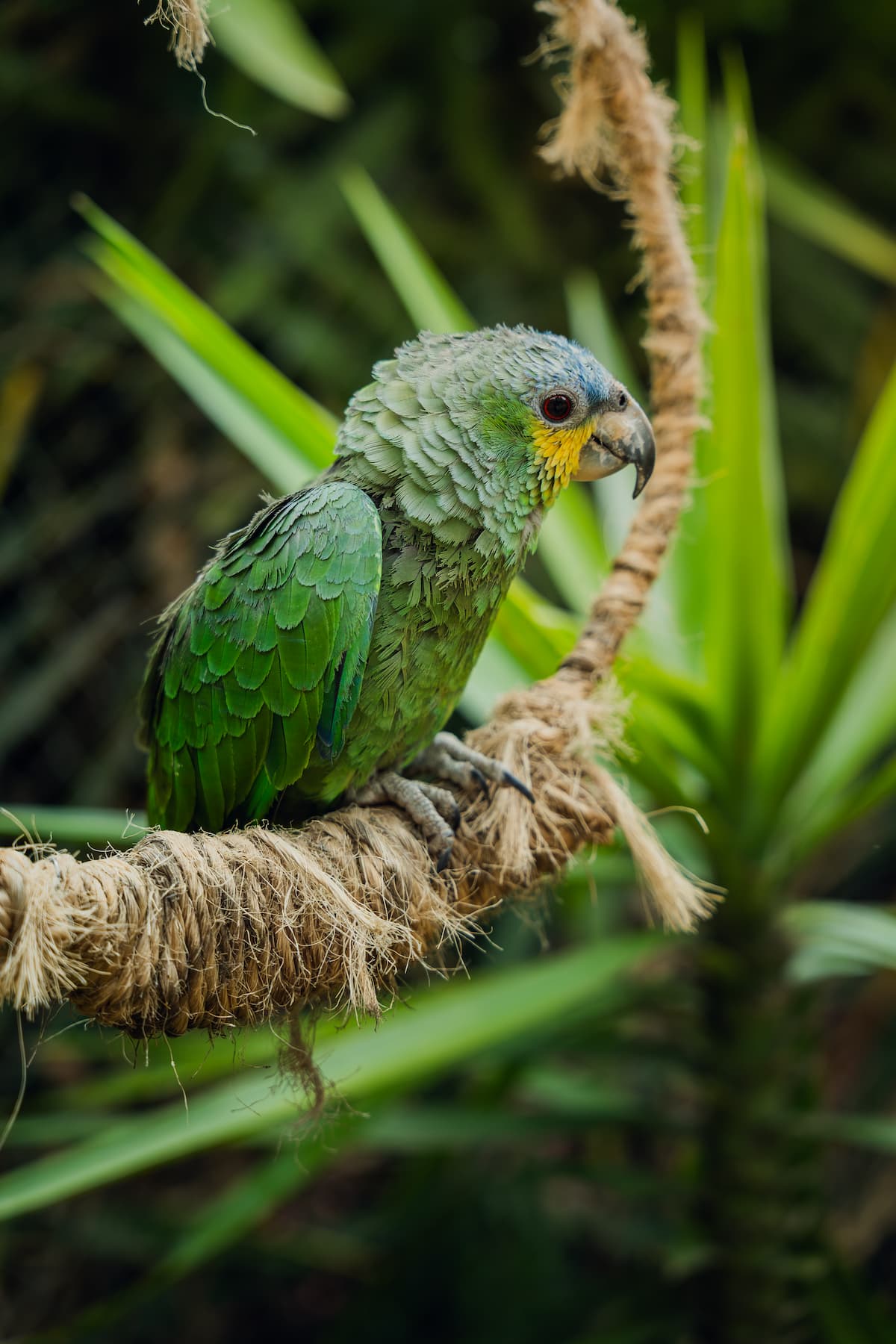
Seizures and Rescue of Wild Birds
Environmental monitoring reports in the Andean-Amazon region reveal that thousands of live specimens, mostly destined for private collections or the pet market, are seized every six months during police and environmental operations.
However, it is estimated that for every animal successfully rescued, several others die during the process. This shows that psittacid trafficking affects not only the captured individuals, but also entire populations and the ecosystems where these birds play essential roles.
The Cruelty Behind Psittacid Trafficking
Behind the image of a talking parrot in a home lies a chain of extreme mistreatment and irreversible ecological damage.
High Mortality Rate
Due to terrible transportation conditions, many birds are crowded into boxes, PVC tubes, or even taped inside suitcases and clothing. As a result, more than 70% die from dehydration, suffocation, stress, or trauma before reaching their final point of sale.
Loss of Biodiversity
Psittacids play a fundamental ecological role as seed dispersers and pollinators. Their massive extraction has caused multiple species to be classified as endangered or under threat categories according to the International Union for Conservation of Nature, IUCN.
Difficulty of Reintegration
A bird raised in captivity from the chick stage becomes imprinted on humans and loses its ability to socialize with members of its own species, search for food, or escape from predators.
This drastically reduces its chances of successfully returning to the wild, even when it is rescued by authorities.
Why Is Training in Psittacid Management Important?
The trafficking of psittacids is not only an environmental crime. It also represents a major challenge for centers that must keep these birds in captivity, especially when they cannot be released back into the wild.
They are long-lived, intelligent, and highly social birds. Their physical and psychological health depends on their ability to socialize with other birds of their genus or species, receive appropriate stimulation, and, whenever possible, fly in semi-free conditions.
All of this requires the daily work of handlers specialized in this group of birds. Incorrect management can increase stress, affect behavior, weaken health, and reduce the chances of rehabilitation.
That is why the Psittacid Management Course seeks to strengthen the knowledge needed to understand their needs, behavior, the risks associated with captivity, and the importance of applying good practices in rescue, conservation, and environmental education centers.
A Responsibility Toward Conservation
Caring for psittacids involves much more than feeding them or keeping them in a safe space. It means understanding their history, their ecological role, and the consequences of illegal trafficking that, in many cases, led them to depend on human care.
Each rescued parrot, macaw, or parakeet represents an opportunity to educate, raise awareness, and improve wildlife management practices.
Taking the Psittacid Management Course is a way to contribute to conservation through knowledge, responsibility, and commitment to animal welfare.
Enroll in the Psittacid Management Course and strengthen your knowledge to contribute to the care, management, and conservation of parrots, macaws, and parakeets.


